|
Home Indiana Time Debate 1: Daylight Saving > The West Wing Sunshine Act Debate 2: Eastern vs Central More Info History Videos | Sunshine Protection Act of | |||||
|---|---|---|---|---|---|---|
|
A bill in the US Congress to make Daylight Saving Time permanent. Every congress since 2018 the same bill has been introduced to effectively make daylight saving time permanent. The proposal changes the definition of each of the US time zones to advance them one hour and then ends seasonal daylight saving time. The proposal provides "an extra hour of sunshine" at the end of the workday at the cost of "an extra hour of darkness" at the beginning of the workday. In Indiana and Michigan that would lead to a few days each winter where the sun does not rise until after 9am. In 2022 the bill passed the Senate (Unanimous Consent 3/15/2022) but did not make it out of committee in the House. In 2026 the bill passed the House (308-117) and is currently in committee in the Senate. Congress must pass the bill by the end of 2026 for it to become law. If not passed, it will need to start over as a new bill in the next congress (2027). | |||||
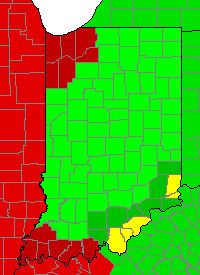
| Counties in yellow are closest to Louisville and Cincinnati and would be the most likely to want to stay in EST. Counties in dark green are in the Louisville and Cincinnati basic economic areas. | ||||||
What would Permanent DST look like in Indiana? There will be sunrises after 9am less than 56 days per year (56 days near northwest Indiana, 0 days near southeast Indiana). Sunsets would be no earlier than 6:09pm statewide (6:09pm in northeast Indiana, 6:28pm in southeast Indiana). 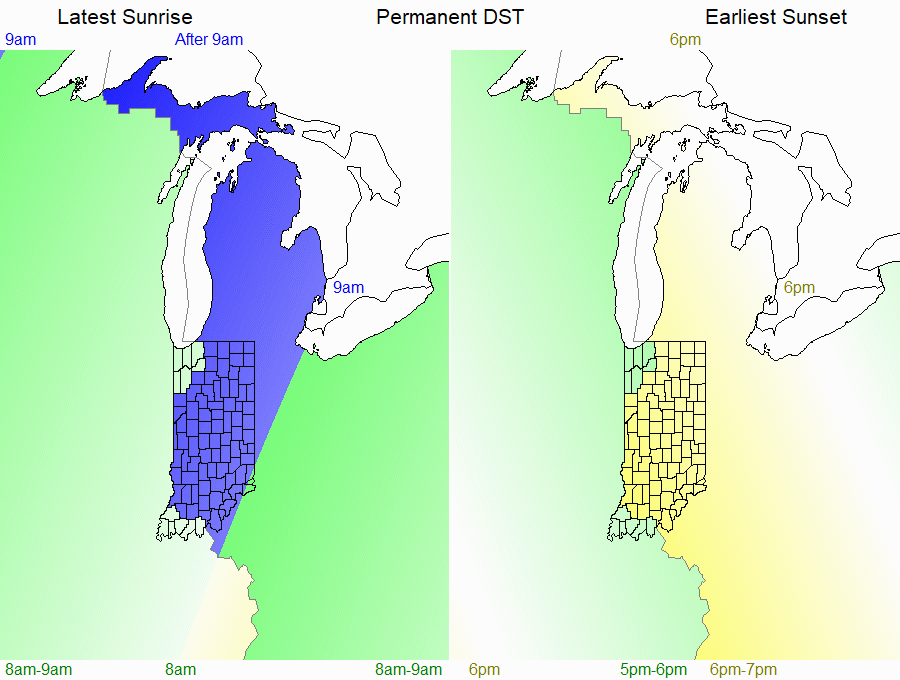 On the left, the area in blue would have sunrises after 9am (up to 56 days in Indiana). The areas in green would have their latest sunrise between 8am and 9am. On the right, the area in yellow would have no sunset earlier than 6pm year round. The areas in green would have their earliest sunset between 5pm and 6pm. 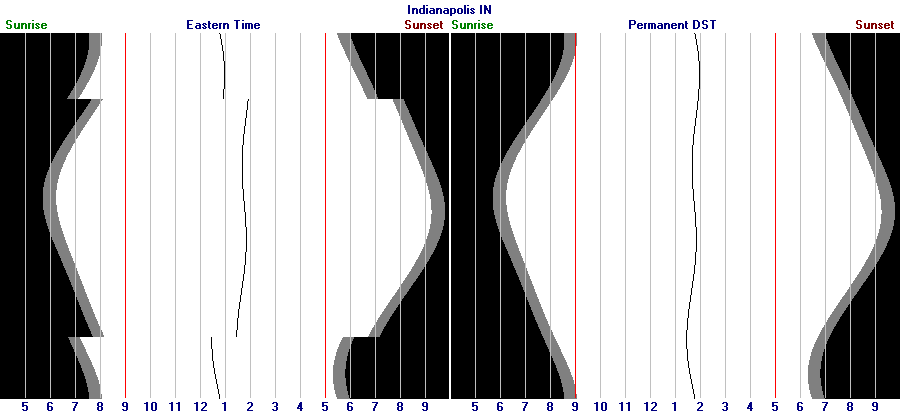 A comparison of Eastern Time with DST and Permanent DST in Indianapolis. Permanent DST would create a latest sunrise of 9:06am with 38 days after 9am. The "fall back" prevents sunrises after 8:11am but has an earliest winter sunset at 5:19pm. 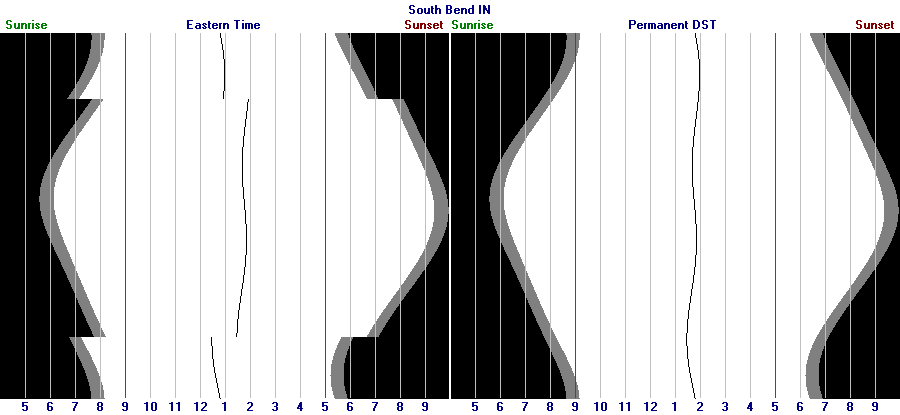 A comparison of Eastern Time with DST and Permanent DST in South Bend. Permanent DST would create a latest sunrise of 9:12am with 52 days after 9am. The "fall back" prevents sunrises after 8:15am but has an earliest winter sunset at 5:14pm. Options for Indiana and Michigan One option to avoid the later sunrises created by the act would be for Indiana and Michigan to opt out of daylight saving time. This would effectively move each state into the newly advanced central time zone. The extremes currently observed would continue to be observed. Opting out at the state level would require all eastern time counties to observe the current definition of standard time (UTC-05). The states can also petition to move a portion of their state into central time (as shown below with seven Indiana counties near Louisville and Cincinnati remaining in eastern time). 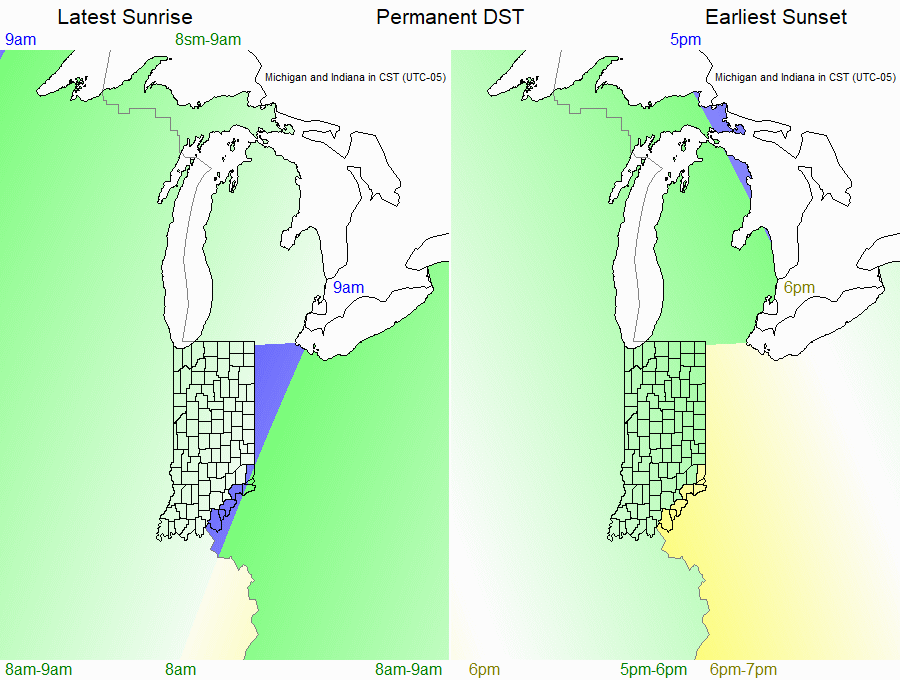 This diagram shows Michigan and Indiana opted out of permanent DST. Note seven counties in southeast Indiana shown as Eastern Time due to their ties to Louisville and Cincinnati. Additional counties may choose to remain on Eastern Time. While opting out would restore the current latest sunrise and earliest sunset, it would create a situation where Michigan and Indiana would no longer be on the same time as Ohio, eastern Kentucky and everywhere else in the eastern time zone. Indiana and Michigan would be on "Chicago Time". Michigan and Indiana chose to be on Eastern Time "for the convenience of commerce". Any move back should also be made under that standard, not because of personal preference. Michigan and Canada Connections Canada is considering (through a province by province process) moving to Permanent DST, which would affect commerce ties to Michigan. Ontario passed a law in 2020 to move to Permanent DST in coordination with the state of New York and the province of Quebec. If Michigan decides to stay on Eastern Time it would make less economic sense for Indiana to move to Central Time. The map showing Michigan remaining in Eastern Time and Indiana moving to Central Time is shown here. 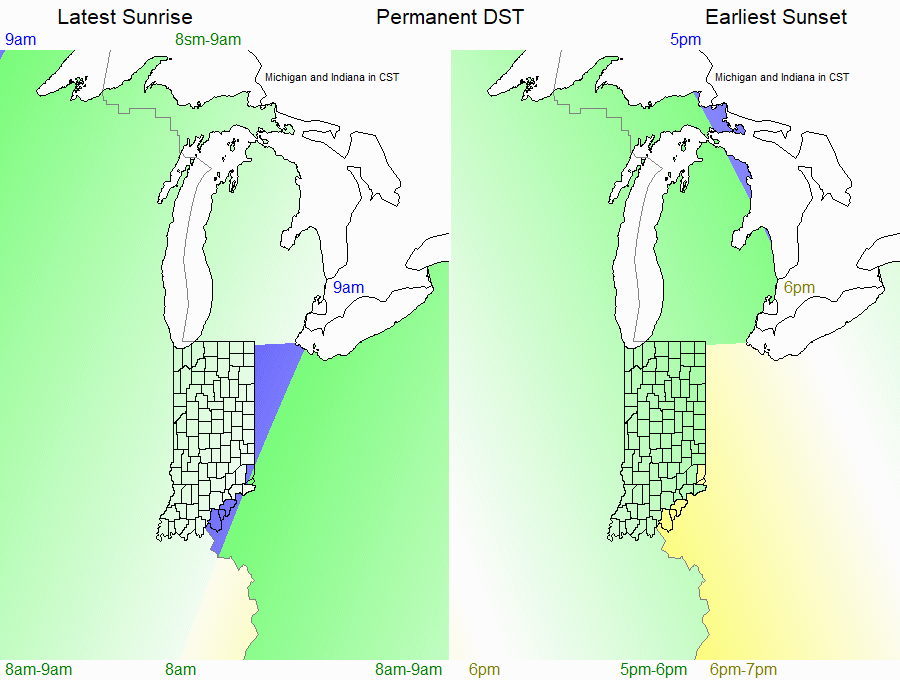 The shading above focuses on the extreme latest sunrise and extreme earliest sunset - statistics usually used by proponents of solar based time zones. Time zone divisions also represent economic divisions. Dividing Indiana from Michigan, Ohio and the eastern United States should only be done for "the convenience of commerce". While there are economic ties to Illinois and the west, there is a benefit in being in sync with the majority of the US population (47% of the US population is in Eastern Time, 29% is in Central Time). See Eastern vs Central for the time zone debate. See The Sunshine Protection Act for more details and national focused discussion. | ||||||